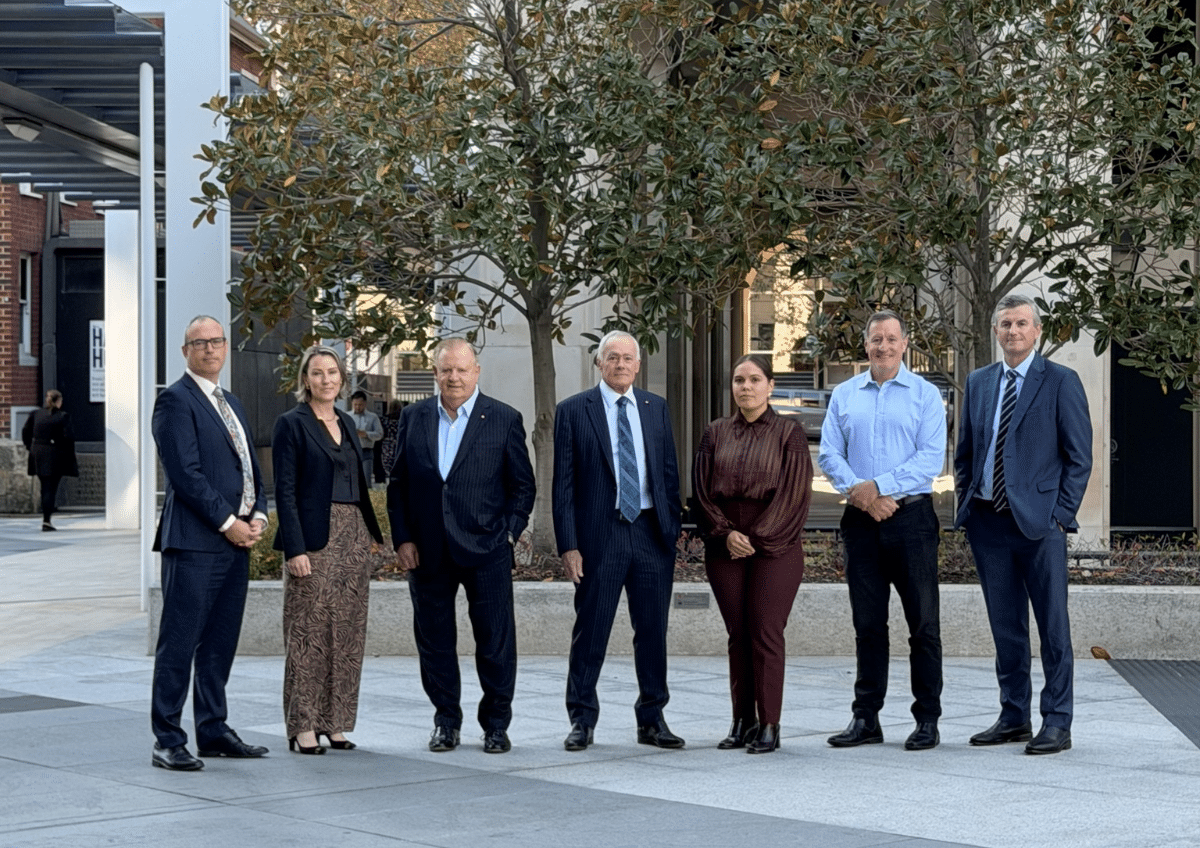












Campaign for choice
If you want the freedom to shop when and where you choose, a new campaign launched by CCI and the Committee for Perth gives consumers the tools and information to have their say.
Perth consumers who want extended weeknight trading hours are being asked by CCI and committee for Perth to stand up a...
Member and/or subscriber access only. Call (08) 9365 7455 for password help or click ‘CCI Member Login’ on the right-hand side to login
|
|
CCI succeeds in securing award modernisation changes
In a significant win for members, CCI's lobbying of the Federal Government and submissions to the Australian Industrial Relations Commission (AIRC) on a number of key issues have resulted in important changes that achieve both cost savings and efficiencies in implementation of the new modern awards....
Member and/or subscriber access only. Call (08) 9365 7455 for password help or click ‘CCI Member Login’ on the right-hand side to login
|
|
Christmas shoppers get a taste of modern trading hours
At a time when Perth consumers and retailers are still fighting for the opportunity to shop on weeknights, the Retail Traders' Association of Western Australia has welcomed the State Government’s decision to issue the most flexible Christmas trading hours in the State's history.
Retailers will be...
Member and/or subscriber access only. Call (08) 9365 7455 for password help or click ‘CCI Member Login’ on the right-hand side to login
|
|
Education reforms crucial for a better tomorrow
A strong education and training system is essential to provide young people with the knowledge, skills, understanding and values necessary for work and life. Employers need skilled people to make their organisations productive, innovative, profitable and competitive.
CCI launched its Building a B...
Member and/or subscriber access only. Call (08) 9365 7455 for password help or click ‘CCI Member Login’ on the right-hand side to login
|
|
Electricity change vital to customers
Electricity reform remains an important issue in Western Australia with CCI continuing to campaign for the benefits of disaggregation.
The successful process of electricity reform is set to continue in Western Australia following the Government's announcement that it does not intend to proceed wi...
Member and/or subscriber access only. Call (08) 9365 7455 for password help or click ‘CCI Member Login’ on the right-hand side to login
|
|
Carbon Sceme Delayed For Now
The Government’s bill to implement Australia’s Carbon Pollution Reduction Scheme and a renewable energy target of 20% by 2020 was defeated in the Senate on 13 August 2009.
Minister for Climate Change, Senator Penny Wong announced that the Government intends to reintroduce the bill to the Senate a s...
Member and/or subscriber access only. Call (08) 9365 7455 for password help or click ‘CCI Member Login’ on the right-hand side to login
|
|
Deregulation of intrastate avaition delayed
Disappointment has risen with the State Minister for Transport delaying a decision about the future regulatory model governing part of the intrastate aviation industry.
CCI is urging the Minister to immediately release the report produced by the Steering Committee for the Review of Intrastate...
Member and/or subscriber access only. Call (08) 9365 7455 for password help or click ‘CCI Member Login’ on the right-hand side to login
|
|
Healthy workforce positive for all
As the Australian population ages, maintaining the health of the nation’s workforce will become an increasingly important strategy in bolstering economic growth and maximising workforce participation.
The link between illness and reduced productivity is well documented. There is also a growin...
Member and/or subscriber access only. Call (08) 9365 7455 for password help or click ‘CCI Member Login’ on the right-hand side to login
|
|
CCI has called on the State Government to overhaul the State’s industrial relations system based on the needs of businesses still operating in the State system.
With more than 75% of the State’s businesses functioning in the federal system under the Fair Work Act 2009 (the FW Act), the...
Member and/or subscriber access only. Call (08) 9365 7455 for password help or click ‘CCI Member Login’ on the right-hand side to login
|
|
New broadband infrastructure for WA
The Federal Government recently announced a request for tender to develop a backhaul telecommunications cable from Perth to Geraldton, as a part of the National Broadband Network’s Backhaul Blackspots Initiative.
CCI has long advocated the importance of ensuring Western Australia has a ...
Member and/or subscriber access only. Call (08) 9365 7455 for password help or click ‘CCI Member Login’ on the right-hand side to login
|
|
New health report echoes member concerns
CCI has many members in the health sector, with around 10% of the membership represented in health and social assistance organisations, both public and private.
Such businesses include large and small hospitals, day clinics, primary care clinics such as GPs and allied health professionals, ag...
Member and/or subscriber access only. Call (08) 9365 7455 for password help or click ‘CCI Member Login’ on the right-hand side to login
|
|
Opportunities available for local suppliers
There have been recent calls for local businesses to have a greater share of work on major projects. CCI has a ready made service set up to ensure exactly this happens.
The Industry Capability Network of Western Australia (ICNWA) is part of the national network of independent consultancies sp...
Member and/or subscriber access only. Call (08) 9365 7455 for password help or click ‘CCI Member Login’ on the right-hand side to login
|
|
Unions taking advantage of new IR laws
Business concerns that unions across the nation will seek to exploit their new found power under the Federal Government’s recent industrial relations changes are proving to be correct, with several unions already engaged in a bitter turf war for members and influence.
In the weeks since the n...
Member and/or subscriber access only. Call (08) 9365 7455 for password help or click ‘CCI Member Login’ on the right-hand side to login
|
|
Bad behaviour to return
The construction industry looks set to return to the bad behaviour of the past because of legislation introduced into Parliament abolishing the Australian Building and Construction Commission (ABCC), and creating a new, less effective construction watchdog, the Fair Work Building Industry Inspectora...
Member and/or subscriber access only. Call (08) 9365 7455 for password help or click ‘CCI Member Login’ on the right-hand side to login
|
|
Common sense prevails in minimum wage decision
The Australian Fair Pay Commission (AFPC) has listened to the concerns of business in deciding to maintain minimum wages at current levels. The decision by the AFPC will not only assist Western Australian business and industry to ride out the worst of the current global economic uncertainty, but imp...
Member and/or subscriber access only. Call (08) 9365 7455 for password help or click ‘CCI Member Login’ on the right-hand side to login
|
|
Employers successful in lobbying the ATO
The lobbying efforts of CCI and others have resulted in the Australian Tax Office (the ATO) revising its decision to include regular overtime in the calculation of superannuation liability.
For members who have employees working significant amounts of regular overtime, this is an important victor...
Member and/or subscriber access only. Call (08) 9365 7455 for password help or click ‘CCI Member Login’ on the right-hand side to login
|
|
Details revealed for parental leave scheme
The Federal Government’s newly released plan for a paid parental leave (PPL) scheme takes into account many of the concerns CCI raised on behalf of business.
The scheme will, from 1 January 2011, allow for the primary caregiver to access 18 weeks post-natal leave, paid at the adult federal minim...
Member and/or subscriber access only. Call (08) 9365 7455 for password help or click ‘CCI Member Login’ on the right-hand side to login
|
|
Important first steps for retail trading hours
CCI has welcomed the Premier’s recent announcement that legislation allowing shops to trade until 9pm on weekdays will be introduced into Parliament.
CCI’s strong advocacy for deregulated shopping hours is underpinned by the core benefits to business and the community of choice, convenience, com...
Member and/or subscriber access only. Call (08) 9365 7455 for password help or click ‘CCI Member Login’ on the right-hand side to login
|
|
Health reform needed to cure labour shortage
CCI has recently released Caring for Tomorrow: A Health Workforce Discussion Paper, which makes a compelling argument for government to address workforce shortages to ensure the long-term sustainability of the health sector and the economy.
The health sector is an essential part of an efficient ...
Member and/or subscriber access only. Call (08) 9365 7455 for password help or click ‘CCI Member Login’ on the right-hand side to login
|
|
Commerce and culture important partners
The arts are a vital part of a vibrant city. The relationship between business and the arts is more important than ever, with most major arts initiatives having a level of corporate support.
CCI and the Perth Theatre Trust will be hosting their own evening of world-class music, ballet and theatre...
Member and/or subscriber access only. Call (08) 9365 7455 for password help or click ‘CCI Member Login’ on the right-hand side to login
|
|
Aged care an urgent issue
The ageing Australian population is perhaps the most challenging social policy issue currently facing the Australian Government. It has implications for health care, housing and community care including disability care.
As people age, the likelihood of having a disability or caring for someone w...
Member and/or subscriber access only. Call (08) 9365 7455 for password help or click ‘CCI Member Login’ on the right-hand side to login
|
|
Reviewing the review – harmonising OSH legislation
Deputy Prime Minister Julia Gillard released the final of two reports of the national review into model occupational health and safety (OHS) laws on 13 February 2009.
In accordance with the review's terms of reference, the panel was required to examine and make recommendations on the optimal content of a model OHS Act and report to the Workplace Relations Ministerial Council in two stages.
In written and verbal submissions to the review, CCI emphasised the need for national harmonisation underpinned by a review that provided more than a filtering exercise of existing requirements in all jurisdictions. CCI strongly believes the review imperative is to provide evidence based proposals in respect to improving workplace safety.
Initial discussions with the three member review panel were encouraging in that the panel was keen to adopt a very innovative approach to the proposed occupational health and safety legislative model.
The proposed model falls well short of providing the innovation necessary to persuade industry, the unions and possibly the jurisdictions to adopt in total. The recommendations are generally based upon an existing provision in at least one or more of the jurisdictions and adoption of the one that best fits with the review’s proposed framework.
The key recommendation of the review is a transition from a focus on the traditional employer-worker relationship within a workplace environment to the broader application of business or undertaking. Based upon the Queensland model, the difference between business and undertaking is the element of profit making. The proposed definition means any business or undertaking except for private or domestic activity that involves any non social, work related activity by a worker, volunteer or person in any other capacity may be captured.
Overall, the report contains limited positives for employers. More so the positives are in what it does not recommend rather than in what it does. For example, unions would have right of entry and the opportunity for considerable involvement in workplace OHS activity but not the power to prosecute employers.
In many areas Western Australian legislation is consistent with the high level recommendations and most changes will be in the detail that will become evident in the first draft of the model Act.
The key proposals not in WA legislation include:
- reversal of the onus of proof in certain circumstances;
- regulators to have a role promoting and supporting education, training and information for duty holders including the provision of advice and information;
- strengthening of personal liability provisions;
- safety representatives to have the power to initiate a stop work;
- requirement on employers to employ or engage qualified persons to provide OHS advice with businesses employing 30 or more to have a workplace health and safety officer;
- a specific duty of care on OHS consultants with qualified exemptions for legal practitioners and unions, and;
- discrimination, victimisation and coercion provisions strengthened
The process for delivering the change is not entirely clear. Ms Gillard has requested senior officers of all jurisdictions to consult and comment on the report.
No doubt the consultation process will result in recommendations for change. Industry has not been formally invited to provide comment and may not have substantive input until the draft Act is available.
Eventually each jurisdiction will be expected to adopt the model legislation within a tight timeframe of two to three years. Given the lack of meaningful industry and union consultation at a national level, individual jurisdictions will be under pressure to make local changes to the proposed model.
The Western Australian Minister for Commerce Troy Buswell has indicated he will take advice on implementation of the report recommendations from the Commission for Occupational Safety and Health.
By Anne Bellamy
CCI Health, OSH and Workers' Compensation Director
|
Global financial crisis opens the door for public sector reform
Recently CCI released its Pre-Budget Submission, which focused on public sector reform to protect Western Australia's financial position and ensure the AAA credit rating was retained.
The submission prompted the WA Government to renew its commitment to deliver much needed reform of the public sector.
At a recent business luncheon, the Premier Colin Barnett indicated his intention to review the government sector to improve the efficiency of its operations. Notably, the Premier said he had asked every Minister to look carefully at their agencies and review them totally.
While the Premier responded favourably to CCI's Pre-Budget Submission, the overall response has been somewhat mixed.
Nonetheless, CCI strongly believes that broader reforms to the public service are necessary to make certain that resources are directed to their most valuable use, and that increased efficiencies are achieved in program delivery. Such reforms are particularly important given deteriorating economic and financial conditions in WA.
As part of this goal, there is a need to reduce the number of government agencies, particularly where there is duplication and inefficiencies, or their function is no longer required. At present, WA's government structure has more agencies, departments, committees and government entities than most other states.
CCI's Pre-Budget Submission identified a number of government bodies that should be scrutinised, because they might no longer be needed or their work could be done more efficiently.
Subject to such a review, these bodies could be consolidated, abolished, or their services privatised or contracted out.
That is not to say that this will be, or should be, the final outcome. Rather, the review may determine that the State Government is best placed to provide these services, or that the services are currently being provided efficiently.
It is necessary to investigate the government sector at an agency level as this is likely to lead to significant cost savings. Such reforms could significantly improve Western Australia's budget position and allow government to focus its attention and funding on its core areas of service delivery.
The options identified in CCI's pre-budget submission are by no means an exhaustive list of agencies which should be reformed. Rather, the list provides examples of the types of reforms that CCI believes the government should consider as part of the economic audit process.
While the current economic circumstances are challenging, they also present the State Government with the opportunity to implement lasting reforms. CCI will continue its long standing push for reform of the public sector to ensure efficient and effective delivery of services, including those that benefit business.
By Dana Mason
CCI Senior Economist
|
Minimum pay increase not recommended
In its submission to the 2009 Minimum Wage Review, CCI will call on the Australian Fair Pay Commission (AFPC) not to order an increase in regulated minimum wages in its current review.
CCI's submission, in addressing the AFPC's wage setting parameters set out in section 23 of the Workplace Relations Act 1996, argues an increase should not be awarded on the following grounds:
- the near unparalleled level of global and domestic economic downturn and risk, and the increasing negative impacts on employers directly and indirectly subject to increases in minimum wages;
- the very high minimum wage increase of October 2008 (five months ago);
- two stimulus packages providing additional income to the lower paid;
- reductions in inflation, and forecast further easing in prices.;
- scheduled tax cuts from 1 July 2009;
- forecast increases in unemployment;
- pending cost increases for employers from both 1 July 2009 and 1 January 2010 (including costs flowing from award modernisation), and;
- emphasising the significant uncertainty facing the Australian economy and labour market in mid 2009, and lack of clarity on when the full implications, extent and duration of the financial and economic crisis will become clear.
If members wish to discuss CCI's submission please contact Jonric Ridley at CCI on (08) 9365 7642 or jonric.ridley@cciwa.com.
By Marcia Kuhne
CCI Workplace Relations Policy Manager
|
Bradley Report benefits business
The Chamber of Commerce and Industry Western Australia has welcomed Professor Denise Bradley's report on the Higher Education Review and its recommendations to the Deputy Prime Minister.
In particular, the recommendations recognised Australia's tertiary education sector as a provider of education services which represented Australia’s third largest export sector.
From a business perspective, the recommendations that capitalise on the sector's export advantage and provide greater flexibility to providers in a market environment will strengthen and advance the sector for the benefit of all Australians.
CCI recognises the value that higher education brings to the nation's economy through building a highly skilled, innovative and technologically competent workforce and thereby ensuring sustainable supply of skilled labour to Australian industry. The higher education sector has become an increasingly important training provider for industry.
It is critical for business and industry to invest in education and training to maximise our future skilled labour requirements and to focus on skills across the board. Users of the education and training system need to be aware of the diverse range of education and training opportunities that are available from the vocational education and training and higher education sectors.
The recommendation to gradually introduce a student entitlement scheme across higher education and upper levels of VET funding is consistent with the Australian Chamber of Commerce recommendations made in Skills for a nation: A blueprint for improving education and training 2007-2017.
The demand driven, student centred entitlement model would provide the benefit for students to have direct influence and choice of course offerings and institutions, and see public institutions facing stronger competitive pressures. For this recommendation to have full effect, tertiary institutions will need to liaise closely with businesses to provide comprehensive career advisory services to students making career choices.
Recommendations to develop innovative, collaborative and local solutions to the provision for higher education in regional and remote areas are welcomed. Higher education institutions play a key role in economic development within Australia's regions. This activity proposes funding to develop innovative local solutions through a range of flexible and collaborative delivery arrangements with other providers. To ensure better choices are offered to students, collaboration and work with industry is encouraged.
CCI supports increasing funding for the access and participation of under represented groups of students. The recommendation suggests funding to be increased to a level equivalent to 4% of the total grants for teaching. This would be allocated through a new program for outreach activities and a loading period to institutions enrolling students from low socio-economic backgrounds.
Additionally, CCI welcomes activities to review the effectiveness of measures to improve higher education access and outcomes for Indigenous people. This recommendation includes the need for the Australian Government to undertake this activity in consultation with the Indigenous Higher Education Advisory Council.
The Federal Government will consider the report and provide a response to the recommendations based on a set of core principles:
- opportunity for all
- academic freedom and autonomy
- research that advances knowledge and critical thinking
- access to university based on merit, not ability to pay
CCI welcomes the government's ongoing response to the recommendations throughout 2009.
By Sean Wrigley
CCI Education and Training Director
|
CCI calls for efficient and
Current economic circumstances have significantly altered the budget position of the newly elected WA Government, which will now need to demonstrate careful budget management to ensure that the previously forecast billion dollar surpluses do not turn into deficits.
Such challenging economic circumstances also present the state with the opportunity to implement lasting reforms to the public sector and thereby address the budget pressures that have arisen from unsustainable growth in general government expenditure in recent years.
The excessive growth in general government spending by successive WA governments has long been of concern to CCI, particularly given that it was not coupled with a commensurate increase in service delivery. With the economic climate now far less favourable, the WA Government can no longer rely on a strong revenue base to support continued spending blowouts.
CCI has welcomed recent announcements by the WA Government to contain expenditure growth, through its commitment to impose a once-off, 3% efficiency dividend, as well as to conduct an economic audit of the operational and financial performance of the WA public sector.
It is important that ongoing measures are adopted to ensure expenditure growth is contained. Such measures must have a primary focus on containing wages growth, including the setting of aggregate wage growth targets for departments and agencies and instituting an efficiency dividend on output costs of at least 1% a year.
CCI has also welcomed the WA Government's renewed focus to ensure that the public service operates effectively and has put forward a range of initiatives to improve government management. These initiatives centre on clear and measurable performance targets and the establishment of a clear strategic direction.
Broader reforms to the public service, through the reduction in the number of departments and agencies, are also necessary. There are many opportunities to create a more efficient public service through increased private sector involvement and scaling back agencies that are no longer relevant, or do not perform a core function of government.
Exerting control over expenses is not only important to preserve the state's budget position, but will also ease pressure on the government to find additional revenues during difficult financial times, which would otherwise increase the burden upon taxpayers.
The WA Government should use the 2009-10 State Budget to demonstrate its commitment to providing genuine taxation relief and reform to taxpayers and reverse the deterioration in the state's taxation competitiveness in recent years.
Although the government's ability to direct adequate funding towards tax cuts has been limited by the deteriorating short term outlook, some effort to provide taxation relief is expected and required to promote growth and investment in the state.
The government's election commitment for the provision of $250 million in tax cuts is a positive first step in what CCI hopes will be part of an ongoing program aimed at improving WA's tax competitiveness. To maximise the impact of this modest commitment, the allocation should be applied to one tax reduction measure. Reducing the payroll tax rate and increasing the exemption threshold and addressing the recent surge in land tax assessments are the priority taxation issues.
The WA Government plays a key role in the state's economic development through the provision of high quality social and economic infrastructure. It is now more important than ever that such infrastructure is provided in a fiscally responsible manner.
The government needs to be prudent in its investment decisions to ensure net debt levels do not threaten the state's AAA credit rating. A key aspect of this is to develop an appropriate means of prioritising infrastructure projects under consideration - including those that form part of the Royalties for Regions policy - through the development of a medium term infrastructure plan.
The timing of projects is equally important. By constructing key projects in a counter cyclical manner, this will prevent a 'crowding out' effect, which occurs when the public and private sectors compete for a limited amount of resources.
CCI supports the government's infrastructure priorities identified in its recent submission to the National Infrastructure Audit, including the Ord Stage 2 project, common use infrastructure for Oakajee Port, the Northbridge Link, Pilbara housing and Indigenous essential services and transport links around the Perth Airport.
It is important that the government plans for the state's long term infrastructure needs and resists the temptation to scrap projects that are not an immediate priority.
In addition to these projects, CCI has also compiled a list of key economic and social infrastructure priorities for consideration as part of the 2009-10 budget, including:
- Broadband in WA
- Bunbury Outer Ring Road
- Multi-purpose outdoor stadium
- Perth Waterfront Precinct
While the deteriorating economic conditions have certainly brought about a need for prudent financial management, it is critical not to lose sight of the positive longer term outlook for the state.
CCI has identified a range of key policy priorities which it believes are essential to long term growth and development in the state. These issues are detailed in CCI's 2008 policy paper, Strategies for Growth. A copy of this document is available on CCI’s website.
This long term agenda is even more crucial in these challenging economic times. Governments must resist calls for further regulation and industry assistance and should continue an economic reform agenda that is critical to sustained, long term prosperity. No other economic system has proved as capable as free enterprise in providing the economic circumstances most likely to deliver a sustained high standard of living.
These issues were presented to the WA Government in CCI's 2009-10 Pre-Budget Submission in early February.
By John Nicolaou
CCI Executive Director, Economic Policy and Chief Economist
|
CCI to Senate Inquiry: Fair Work Bill will complicate agreement making
In its presentation to a Senate inquiry hearing in Perth on 29 January 2009, attended with CCI members Compass Group Australia and Clough, CCI discussed a number of its 48 recommendations for amendments to the Fair Work Bill 2008.
In its discussion on agreement making, CCI told the inquiry that WA businesses wanted enterprise agreements that were easy to use, easy to make and delivered improved productivity; a reasonable expectation given the Bill's object to "promote national economic prosperity….by achieving productivity and fairness through an emphasis on enterprise level collective bargaining".
CCI told the inquiry that the regulatory requirements in the Bill were likely to delay and frustrate the agreement making process, compounded by the number of opportunities for orders from the new umpire Fair Work Australia.
The new good faith bargaining requirements introduced ambiguity likely to result in arguments and potentially litigation, complicating negotiations and diverting the focus away from the key concerns of the employee and the employer. For example, the requirement to refrain from "capricious or unfair conduct" will have a range of meanings dependent on a negotiating stance and is open to abuse.
Matters that can be included in bargaining for an enterprise agreement (known as "permitted matters") have been significantly expanded to include matters not directly affecting the employment relationship. This has potential to lead to protracted bargaining including wasted time in argument over whether a matter is "permitted" or not. The range of matters is likely to include union related claims such as trade union training leave and leave to attend union business. Expansion of permitted matters can also lead to more protected industrial action because employees can go on strike over any of the range of expanded matters on the bargaining table.
The Bill gives a union an automatic right to sit at the bargaining table with the employer on the sole proviso that it has one member, even if the business employs hundreds of employees.
Options for several streams of bargaining such as multi-employer and single employer will mean businesses could be faced with bargaining in both the multi-employer and the single enterprise streams.
A low-paid bargaining avenue adds further complexity as it looks like an opportunity for pattern bargaining across industry sectors, including an option for arbitrated results, accessible to employees who may already be covered by enterprise agreements.
A new "better off overall" (or "BOOT") test means that each award and prospective award covered employee must be better off overall under the agreement compared with the relevant modern award. In other words the test will not be applied globally, as applies currently, but instead to each and every employee. Such a method of applying the test is likely to result in significant approval delays, to mention only one procedural issue.
Access to arbitration would be too easy. Whereas the government previously promised that arbitration would only be available in rare intractable cases, it will be available as soon as negotiation becomes difficult and this undermines the bargaining process.
Changes to greenfields agreements have potential to delay projects, increase costs and create disruption in workplaces due to employee organisation demarcation disputes or overlapping coverage. This is because of the Bill’s requirement on an employer to notify every union that has an interest in the sector of its intention to negotiate pay and conditions for a new workforce.
Belying government assurances that "…existing right of entry laws will be retained", subtle changes will have significant consequences in some worksites likely to also broaden and introduce delays into agreement making. Reducing current requirements for right of entry for holding discussions provides a union with the ability to enter a site so long as there are employees eligible to be members of the union. This change significantly widens the scope for right of entry.
Industrial relations legislation needs to support workplaces to effectively deal with constantly changing national and global economic circumstances. It needs to allow and facilitate flexibility in employment arrangements while safeguarding all participants from unfair or unnecessarily onerous influences.
CCI will keep members informed about the progress of the Bill following the Senate Inquiry due to be finalised by 27 February 2009. If members wish to discuss issues related to the Bill please contact Marcia Kuhne on (08) 9365 7699 or marcia.kuhne@cciwa.com, or contact the Employee Relations Advice Centre (formerly Business Advice Centre) on (08) 9365 7660 or advice@cciwa.com.
By Marcia Kuhne
CCI Workplace Relations Policy Manager
|
Input needed on award modernisation
In the December edition of Business Pulse, CCI alerted members to the potential increased costs many businesses were facing as a result of the award modernisation process underway in the Australian Industrial Relations Commission (AIRC).
Since then CCI has continued to represent the interests of members in the process, lodging submissions with the AIRC in all major industry sectors. Where necessary, CCI has ensured that employee relations consultants have attended AIRC consultations being conducted in Melbourne and Sydney.
Minister for Employment and Workplace Relations Julia Gillard issued a further amendment to her award modernisation request on 18 December 2008 excluding enterprise specific Notional Agreements Preserving State Awards (NAPSAs) from the modernisation process, in addition to her previous instruction to exclude enterprise specific federal awards. The revised request also amended instructions previously provided regarding individual flexibility terms and the interaction between awards and the proposed National Employment Standards (NES).
On 19 December 2008 the AIRC released the final draft modernised awards from the first stage of modernisation. The modernised awards will apply from 1 January 2010 in the following industry sectors:
- catering, liquor and accommodation, restaurants (including clubs)
- clothing (including footwear manufacturing), textiles
- coal mining
- higher education
- metal and associated industries, glue and gelatine, rubber plastic and cablemaking
- mining
- private sector clerical (occupational)
- racing
- rail
- retail (with separate awards for general retailing, fast food, hair and beauty and community pharmacies)
- security services
Concerns raised by CCI and other employer groups regarding the increased costs of employing staff under the new modernised awards were not heeded by the AIRC and the final awards from stage one will undoubtedly impact adversely on many businesses. Of major concern was the significant cost impact in the retail and hospitality sectors, where businesses were already affected by the current economic conditions.
Members should be aware that although the final awards from stage one have been released, the AIRC is yet to address the important issue of transitional arrangements and has indicated that this will not occur until July 2009. The transitional arrangements allow increased rates to be phased in over a period of up to five years. The delay in addressing transitional arrangements creates major difficulties for employers who will be unable to accurately budget for employment costs for the next financial year.
To assist members in planning for the commencement of the new awards, CCI is currently preparing summaries of the key conditions contained in the final awards as they are released by the AIRC. These will be available shortly to CCI members from the Employee Relations Advice Centre on (08) 9365 7660 or by visiting www.cciwa.com/.
The second stage draft modernised awards, 24 in total, were released by the AIRC for comment on 23 January 2009 and cover the following industries:
- agriculture (including wool)
- building, metal and civil construction
- cleaning services
- financial services
- graphic arts (including printing)
- health and welfare (including an occupational award for nurses)
- information and communications, technology
- manufacturing
- private transport
- quarrying
- sanitary and garbage disposal services
CCI has consulted with members and has been involved in negotiations with other employer and employee groups regarding award content in most of these industry sectors. Comments on the draft awards were required by the AIRC on 13 February 2009 before consultations in Sydney between 23 and 27 February 2009.
Stage three of the award modernisation process, covering the largest number of industries, commenced with initial written submissions due by 6 March 2009, with subsequent opportunities available for input. Some of the major industries include:
- airport operations
- food and beverage manufacturing
- meat industry
- entertainment and tourism industry
- licensed/registered clubs
- pharmaceutical industry
- professional engineers and scientists
- vehicle repairs, retail and manufacture (including service stations)
- wholesale industry and commercial travellers.
Member feedback is critical to enable us to make comprehensive submissions. To date the feedback has been limited. CCI strongly urges members to provide their views and input.
To have your say and for a full list of industries covered in stage three please contact the Employee Relations Advice Centre on (08) 9365 7660.
By Sue Laferla
CCI Employee Relations Services General Manager
|
Saving the day
As daylight saving enters its last trial month, the state will now consider its vote in a referendum on 16 May.
The Chamber of Commerce and Industry Western Australia is urging people to vote yes for daylight saving, with the referendum possibly the last chance for this generation of Western Australians to embrace daylight saving as a permanent fixture every summer.
CCI chief executive James Pearson said supporters of daylight saving needed to become involved in the campaign to keep the change.
"CCI calls on all Western Australians who have enjoyed the social and economic benefits of daylight saving over the past three summers to not only vote yes in the referendum, but encourage their family, friends, and colleagues to do the same," he said.
Benefits to WA business from daylight saving included productivity gains, greater flexibility and a more competitive business environment.
Daylight saving eliminated the frustrations and inconvenience of increasing the time difference with customers, clients, suppliers and business and government networks in the eastern states.
"Without daylight saving, the time difference between the east and west coast increases to three hours during the summer months," Mr Pearson said.
"This means that when Western Australians arrive for work in the morning, their eastern states counterparts are out for lunch. When WA workers return from their lunch break, their east coast colleagues are heading home."
The tourism sector expected to enjoy the benefits of daylight saving.
Tourism Council of WA CEO Graham Moss said they were in favour of a yes vote.
"Daylight saving provides longer leisure hours and encourages people to enjoy more tourist attractions, from dining out to going swimming," he said.
There are small energy savings to be gained from daylight saving. The US Department of Energy recently conducted a national study on the energy saving effects of extending their current daylight saving hours, finding small decreases in energy use.
The health benefits of daylight saving are one of its most powerful.
The Cancer Council of WA said concerns that children would be exposed to more intense UV radiation immediately after school were valid, however it was also true that outdoor events, such as sport or swimming activities, could be scheduled in the morning, which in daylight saving would experience lower levels of UV radiation.
The council also promoted taking advantage of daylight saving and heading out in the evenings for exercise.
The Department of Health found in 2007 that Western Australians had been more physically active since the introduction of daylight saving.
Chief medical officer Dr Simon Towler said the introduction of daylight saving provided WA Health with a unique opportunity to study its effect on exercise trends across the state.
"The study showed that men and women from the ages of 16 to 64 had increased the time they spent exercising since daylight saving was introduced," he said.
"Men did an average of 81 more minutes of physical activity in their leisure time each week, while women did an average of 38 minutes more."
CCI will be doing all it can in the lead up to the referendum to highlight the many benefits of daylight saving and encourage as many Western Australians as possible to vote yes.
If you would like to express how your business will be affected by daylight saving in the pages of Busines Pulse, email luke.nieuwhof@cciwa.com.
By Luke Nieuwhof
CCI Journalist
|
Access to finance an increasing concern for business
The ongoing difficulty in accessing credit from banks and other lending institutions across the country has been one of the most important issues for business during the global financial crisis.
As the crisis took hold during 2008, and the number and scale of banking failures increased, acute credit shortages emerged as wholesale credit markets collapsed. The risk premium attached to lending between even the most secure banking institutions increased to record levels.
While there is increasing evidence that liquidity has been restored in financial markets and that banks are now more able to access credit, this has not necessarily translated into improved credit conditions.
Clearly the days of "easy money" for businesses and consumers alike are gone, with the banks suggesting that lending policies have now returned to what was common prior to boom times. Banks are now scrutinising applications for finance in a more detailed manner. Banks had a belief that risk was underpriced during the boom.
The question is whether market or company risk is now "overpriced". Many small and medium businesses are still finding it very difficult to access finance, while those who can have not benefited from the significant cuts to official interest rates by the RBA in recent months.
CCI is concerned that high borrowing costs and difficulties in obtaining finance remain a constraint on business, many of which face the weakest economic conditions experienced in WA for many years. The banking sector is a central element in an efficiently functioning economy and particularly one which has strong long term prospects.
It is imperative that SMEs provide a strong business plan and detailed financial projections when seeking additional finance from banks. This will assist banks in assessing their application and in securing the necessary finance for the ongoing growth and development of their business.
Businesses big and small must take the opportunity to critically review their business operations and ensure that they are well positioned for when the inevitable upturn arrives.
CCI's SME forum, to be held on 21 April 2009, aims to provide practical insights and strategies for businesses to survive and thrive in 2009. This event will comprise a number of expert speakers on a range of topics and will be opened by the WA Treasurer and Minister for Commerce, the Hon Troy Buswell MLA.
By John Nicolaou
CCI Executive Director, Economic Policy and Chief Economist
|
Compulsory arbitration remains a threat
The AIRC decision to increase minimum severance payments for redundant employees and to extend severance pay to small business demonstrates compulsory arbitration has merely been dormant and remains a threat.
The AIRC handed down its decision in the ACTU Redundancy Pay Case in March. The decision...
Member and/or subscriber access only. Call (08) 9365 7455 for password help or click ‘CCI Member Login’ on the right-hand side to login
|
|
CCI to study effects of crime
CCI will be asking members to complete a survey on the effects of property crime on their businesses.
CCI’s Board has recently noted concern in the business community over the incidence of property crime, and the costs it imposes on business and the wider community.
CCI’s Retail and Small Business Unit and Economics Research Service have been instructed to investigate the extent of property crime against business in WA, with a view to developing some concrete policy suggestions.
CCI is looking for input from business on this important issue.
For more information or to discuss this issue, please contact Nicky Cusworth on 9365 7508, e-mail: cusworth@cciwa.com or Brian Reynolds on 9365 7606, e-mail: reynolds@cciwa.com
|
CCI’s Education and Training Policy
Over the coming months, Business Pulse will be featuring articles, comprised from a suite of policy papers composed for the Board, summarising CCI’s general policy objectives on a range of areas across the spectrum of commerce and industry.
These papers reflect the broad scope of CCI’s behind-the-scenes policy work and give members a snapshot of some of the issues and areas in which CCI is working to create an economic and legislative environment that encourages the development of free enterprise.
CCI supports an education and training system that provides choice, promotes flexibility and is responsive to the needs of individuals and industry.
The Australian education and training system is characterised by different, and often diverse, state and territory policies overlayed by the Commonwealth’s policy positions. However, all jurisdictions separate the system into three distinct areas: schools, vocational education and training (VET), and universities.
Although the policy framework in the three sectors is often developed and applied separately, there is considerable overlap and it is increasingly difficult to consider each sector in isolation.
Major policy overlap may be seen in areas such as:
- credit transfer and mutual recognition of qualifications between schools, VET providers and universities
- the student contribution to the cost of VET and university courses and the disparity of costs between sectors
- articulation
- the provision of vocational programs in the post-compulsory school years and the issues this raises for the VET sector
- the graduation of school students with low level literacy, numeracy and employability skills and the issues this raises for the VET and university sectors
- the debate about tertiary entrance requirements and the best way of assessing student capabilities for university entry
Funding and choice
Across all three sectors, public funds and individual choice should be inextricably linked. Student-centred funding allows individuals to take control of the public funds allocated for their own education and training.
In the schools sector, parents who choose private sector education for their children are denied access to the state-provided public funds allocated for their children.
Commonwealth funds are provided to private schools to allow some subsidisation of fees. However, there is no mechanism available for parents to exercise educational freedom and access the public funding to purchase a place for their children at the school of their choice - be it public or private.
Serious consideration should be given by all governments to a range of student-centred funding modules such as student vouchers and charter schools.
The user choice model in the VET sector allows employers of apprentices and trainees to choose the registered training organisation their employees will attend.
The public funds available for this training then follow the student to the provider of choice.
However, all states and territories have progressively moved backwards from full user choice arrangements. The current user choice system is characterised by bureaucratic processes that discourage the entry of new private training organisations into the market, by fixed quotas and ceilings on numbers of apprentices and trainees that can be trained by private providers and by a thin market approach that restricts access in regional areas or occupational areas with low enrolments.
All state and territory governments should immediately implement full user choice arrangements for all employment-based training programs.
In the university sector, individuals are able to exercise choice over course and institution. However, student numbers have been regulated by fixed quotas and student demand controlled by fixed funding models.
The recent higher education reforms will provide greater competition, encourage choice and ensure value and demand are factors that will be considered in determining course offerings.
Choice promotes quality, responsiveness and flexibility. The provision of public funding to support choice should be an essential element of the education and training system.
Literacy, numeracy and employability skills
Parents, post-school education and training providers, and employers share a common expectation that students graduating from the school system will have an acceptable level of literacy, numeracy and generic skills. Unfortunately, these expectations are often not met.
For employers, many young people presenting for employment lack a range of basic skills such as communication, teamwork, problem-solving, initiative, planning and organisation skills, self-management and an appreciation of technology. These basic skills are essential to enable an individual to secure and maintain employment.
There should be a concerted effort to ensure all school graduates possess adequate literacy and numeracy skills.
The ACCI / BCA Employability Skills Framework should be adopted by the schools sector and the key skills in the framework embedded into the school curriculum.
Self-managed institutions
In the schools and VET sectors, a highly centralised and bureaucratic model is used for the management and operation of the systems.
The university sector operates under a decentralised, self-managed model, which has become further deregulated under the recent higher education reforms.
There is a need to move public sector schools and TAFE colleges to a self-managed model where responsibility for major operational issues such as staffing, asset and resource management and financial management is devolved to the schools and colleges.
Two key elements of this decentralised approach are single line budgeting and selection on merit.
Under current arrangements schools and colleges are unable to make major expenditure decisions. Staff costs are allocated and managed centrally and school principals have no control over this area.
Similarly, recruitment and selection processes are managed centrally. School principals have little control over teachers allocated to their school and a similar lack of control over the selection of teachers for senior or supervisory roles.
Teachers are promoted to senior positions based on a range of criteria with length of service being a key consideration.
Schools and TAFE colleges should be locally managed and supported by an expert external board drawn from local community and business and they should have direct control over expenditure, staff costs, selection, recruitment and promotion on merit.
Quality teaching and learning
The most important element of the educational process is the relationship between the individual teacher or trainer and the student. It is essential that all sectors of the education and training sector provide the support needed to allow quality teaching outcomes.
In the secondary school years, teachers should have access to industry access programs or return to industry programs that allow them to maintain links with the workplace and apply their teaching to real world situations.
There should also be a focus on providing programs to suit individual learner needs, which particularly in the senior secondary years will support student retention strategies.
Schools should enter into partnerships with VET providers and universities to offer integrated programs in an effort to make the post-compulsory schooling component meaningful and relevant to the students’ post-school needs.
The quality of teaching and learning will be enhanced by improving the articulation arrangements across the three education and training sectors and by ensuring closer collaboration and connection between schools, VET providers and universities.
Evaluation of program outcomes
Although there is some benchmarking of educational outcomes, there is not a standardised and systematic approach to benchmarking provider performance.
Employers cannot be confident that the same qualification issued by different schools, colleges or universities has covered the same content, been assessed at the same level and produced the same outcome.
There should be a standard approach to the measurement of education and training outcomes to ensure consistency of results.
Equality
All individuals regardless of gender, ethnicity or personal circumstance have a right to access education and training that is relevant to their needs.
With this right comes the responsibility to contribute financially to their own learning in a way that fits their personal circumstances.
There should be education and training opportunities available for disadvantaged groups and people with special needs and recognition that individuals need appropriate resources to support their learning.
|
Second-best electricity measures won’t achieve goals
CCI welcomes the Electricity Industry Act which recently passed through State Parliament, but fears the partial reforms to the WA electricity sector will be insufficient to generate the competition, investment and innovation the sector so desperately requires.
The Act provides the legislative power...
Member and/or subscriber access only. Call (08) 9365 7455 for password help or click ‘CCI Member Login’ on the right-hand side to login
|
|
Will the Government act on its commitment to health reform?
The changes to the WA health system recommended by the report are likely to take more than 13 years to implement and will require a massive initial injection of capital to realise efficiency gains predicted for the future.
The report is highly critical of the current state of the health system an...
Member and/or subscriber access only. Call (08) 9365 7455 for password help or click ‘CCI Member Login’ on the right-hand side to login
|
|
Building Local Industry Policy requires action
State Development Minister Clive Brown released his Building Local Industry Policy on 16 April, outlining the Government’s aim to maximise opportunities for local businesses in major development projects and government procurement in WA.
CCI’s Director, Industry Policy Bill Sashegyi said the Gov...
Member and/or subscriber access only. Call (08) 9365 7455 for password help or click ‘CCI Member Login’ on the right-hand side to login
|
|
Tax cut rethink headed off
Prompt action by CCI has helped short-circuit moves by state tax officials that would have negated the Government’s promise to abolish stamp duty on workers’ compensation premiums.
The Government announced last year, as part of its Review of Business Taxes, that the duty - currently 3 per cent fo...
Member and/or subscriber access only. Call (08) 9365 7455 for password help or click ‘CCI Member Login’ on the right-hand side to login
|
|
Western Power: Reform is the solution, not the problem
If ever a demonstration was needed that the electricity industry in WA requires an overhaul and opening up to competition, the mayhem that occurred on 18 February was it.It showed how reliant the state is on an under-challenged monopoly utility, and that customer and market considerations are not be...
Member and/or subscriber access only. Call (08) 9365 7455 for password help or click ‘CCI Member Login’ on the right-hand side to login
|
|
Draft greenhouse strategy takes sound approach
CCI believes the State Government has taken a commonsense approach in its development of the draft WA Greenhouse Strategy, which was released late last year. CCI’s Greenhouse Reference Group was reconvened in January to discuss CCI’s response to the strategy. Submissions close on 15 March. The strat...
Member and/or subscriber access only. Call (08) 9365 7455 for password help or click ‘CCI Member Login’ on the right-hand side to login
|
|
The spiralling cost of nurses
With WA public sector enterprise agreements due for renewal in 2004, CCI is deeply concerned at the prospect of a claim for an unsustainable increase in WA nurses’ wages. The expectation of a claim in WA comes following the NSW decision to award a second wage increase in 12 months to the highest pai...
Member and/or subscriber access only. Call (08) 9365 7455 for password help or click ‘CCI Member Login’ on the right-hand side to login
|
|
State hypocritical in supporting ACTU wage claim
The Gallop Government’s position on wages is inconsistent and hypocritical. Fresh from months fighting union leaders over public sector rises it said were unsustainable beyond 3 per cent, the Government has happily supported a new ACTU pay claim and argued in favour of private employers paying an ex...
Member and/or subscriber access only. Call (08) 9365 7455 for password help or click ‘CCI Member Login’ on the right-hand side to login
|
|
Broken promises and rising costs: Labor’s Workers’ Comp Bill
The Government has signalled its intention to overhaul the workers’ compensation system at a cost of $100 million in the first year alone. The cost does not include extra administration costs borne by employers, insurers and WorkCover. Three of the five major parts of the Workers’ Compensation Refor...
Member and/or subscriber access only. Call (08) 9365 7455 for password help or click ‘CCI Member Login’ on the right-hand side to login
|
|
CCI advocates ‘back to basics’ policy approach
CCI will take a manifesto of policies to the major political parties this year in a bid to influence the stances they adopt on business and economic issues in the run-up to the state election. The CCI policies are free enterprise focused and pitched to achieve a climate for business success and econ...
Member and/or subscriber access only. Call (08) 9365 7455 for password help or click ‘CCI Member Login’ on the right-hand side to login
|
|
Harvard study says WA wage rises cost jobs
Researchers at Harvard University have studied changes in WA’s minimum wage and confirmed that increases cause job losses. The research published late last year examined the increases to WA’s minimum wage set by the Minimum Conditions of Employment Act 1993 to determine whether increasing the minimu...
Member and/or subscriber access only. Call (08) 9365 7455 for password help or click ‘CCI Member Login’ on the right-hand side to login
|
|
Struggle to the last for electricity reform
A 15-year struggle by industry for an open and competitive electricity market in Western Australia culminates this month with long-awaited reform legislation facing an uncertain outcome in the Upper House of State Parliament. In a late development as Business Pulse went to print, future Liberal lead...
Member and/or subscriber access only. Call (08) 9365 7455 for password help or click ‘CCI Member Login’ on the right-hand side to login
|
|
Legislative responsibilities in environment increasing
A ream of new developments in environmental legislation this year could have far-reaching effects on the way industry operates in Western Australia. CCI continues to be closely involved in the Government’s development of these key environmental policies, in particular, making strong representations ...
Member and/or subscriber access only. Call (08) 9365 7455 for password help or click ‘CCI Member Login’ on the right-hand side to login
|
|
Fremantle Eastern Bypass reserve must stay
CCI met with members of the State Opposition and a wide range of businesses to hear their concerns over the proposed deletion of the Fremantle Eastern Bypass reserve from the Metropolitan Region Scheme. CCI provided the opportunity for the Liberal Party to enunciate its concerns to industry at a for...
Member and/or subscriber access only. Call (08) 9365 7455 for password help or click ‘CCI Member Login’ on the right-hand side to login
|
|
Productivity Commission sends government a wake-up call
In releasing its interim report, the Productivity Commission has sent the Government a very clear and strong message that it cannot afford to make the same mistakes with workers’ compensation that it did with industrial relations. The Commission recommends the establishment of a national workers’ co...
Member and/or subscriber access only. Call (08) 9365 7455 for password help or click ‘CCI Member Login’ on the right-hand side to login
|
|
Action sought to stop lines exploiting helpless shippers
CCI has called on the Federal Government to help fight tactics by shipping lines to ramp up freight charges. CCI has written to the Deputy Prime Minister and Minister for Transport, John Anderson, asking that a review of Part X of the Trade Practices Act due in 2005 be brought forward as a matter of...
Member and/or subscriber access only. Call (08) 9365 7455 for password help or click ‘CCI Member Login’ on the right-hand side to login
|
|
Industry relieved after water licence fees dropped
CCI has welcomed the State Government’s decision to drop plans for introducing water licensing fees and a more expansive charging regime to contribute towards the cost of managing the state’s water resources. In a win for industry, the Government has instead decided to concentrate on how water resou...
Member and/or subscriber access only. Call (08) 9365 7455 for password help or click ‘CCI Member Login’ on the right-hand side to login
|
|
Working hours balance satisfies most
Contrary to popular myth, on average Australians are working shorter, not longer hours. Most are achieving the balance of work and leisure that they want; of those that don’t, more want longer than shorter hours. In this context (from the ABS statistics), any measure to compulsorily curtail working ...
Member and/or subscriber access only. Call (08) 9365 7455 for password help or click ‘CCI Member Login’ on the right-hand side to login
|
|
Breton Bay heavy industry plan scrapped
The only recognised prospective location for a future near-metropolitan site for heavy industry appears to have been scrapped by the Gallop Government in favour of plans for a new coastal eco-city. State Planning and Infrastructure Minister Alannah MacTiernan reportedly said Cabinet rejected in Janu...
Member and/or subscriber access only. Call (08) 9365 7455 for password help or click ‘CCI Member Login’ on the right-hand side to login
|
|
Federal Bill addresses strife in construction industry
It is pleasing to see the Federal Government moving to address industrial problems plaguing the building and construction industry in Australia by introducing the Building and Construction Industry Improvement Bill 2003 (the BCII Bill). The Cole Royal Commission identified the nature and scale of th...
Member and/or subscriber access only. Call (08) 9365 7455 for password help or click ‘CCI Member Login’ on the right-hand side to login
|
|
CCI represented on electricity stakeholder groups
CCI has nominated a number of people for inclusion in stakeholder groups established to provide feedback on aspects of the reform process for the WA electricity market. There was strong enthusiasm from members to contribute to the process. Many of CCI’s representatives are involved in the working gr...
Member and/or subscriber access only. Call (08) 9365 7455 for password help or click ‘CCI Member Login’ on the right-hand side to login
|
|
Gorgon decision sends positive investment message overseas
The proponents made a strong case which was supported by an independent study that affirmed the project was only viable if it proceeded on Barrow Island. CCI made two submissions to the earlier departmental review of this proposal and wrote directly to Cabinet Minsters urging them to grant in-princi...
Member and/or subscriber access only. Call (08) 9365 7455 for password help or click ‘CCI Member Login’ on the right-hand side to login
|
|
Union right of entry is an unjustified privilege
Unions’ right to enter business premises – an entitlement enshrined in the Gallop Government’s overhaul of WA’s industrial relations legislation last year – is an unfair and archaic law. Unions’ primary excuse for policing workplace laws is no longer legitimate when government industrial inspectors ...
Member and/or subscriber access only. Call (08) 9365 7455 for password help or click ‘CCI Member Login’ on the right-hand side to login
|
|
Improved sustainability strategy still a concern
Important changes sought by CCI have been made to the Gallop Government’s State Sustainability Strategy. The final draft of the 300-page policy treatise was released recently by Premier Gallop after nearly a year of consultations and review. However, the Chamber still has reservations about the sust...
Member and/or subscriber access only. Call (08) 9365 7455 for password help or click ‘CCI Member Login’ on the right-hand side to login
|
|
Consumers must take responsibility for purchasing decisions
Calls to tax food further in an effort to combat obesity in the community are misguided and completely ignore recent changes to the regulatory regime of food labelling. Recent media coverage has also focused the public’s attention on perceived deceptive labelling of some manufactured food products w...
Member and/or subscriber access only. Call (08) 9365 7455 for password help or click ‘CCI Member Login’ on the right-hand side to login
|
|
Gap in controlled waste regulations
CCI is concerned about the gap in regulation of controlled waste. The Department of Environment (DoE) has repealed the liquid waste regulations and is no longer managing the WasteTrack system. However, the amended regulations which will fill the gap are still in draft. The repeal of the liquid waste...
Member and/or subscriber access only. Call (08) 9365 7455 for password help or click ‘CCI Member Login’ on the right-hand side to login
|
|
Principles developed at CCI licensing forum
CCI recently hosted a successful licence forum which was attended by a range of industry representatives and Department of Environment officers. The need for the forum arose from the community and the Department of Environment’s (DoE) increasing focus on the performance of industry, and enforcement ...
Member and/or subscriber access only. Call (08) 9365 7455 for password help or click ‘CCI Member Login’ on the right-hand side to login
|
|
OSH changes: Anti-employer plan to bolster unions
Employment Minister John Kobelke has announced draconian changes to the occupational health and safety legislation which will introduce imprisonment for company directors, larger fines, safety representatives as defacto inspectors, unions as the conductor of OSH representative elections and further ...
Member and/or subscriber access only. Call (08) 9365 7455 for password help or click ‘CCI Member Login’ on the right-hand side to login
|
|
Workplace relationships and family life
Work and family is not the number one workplace issue; creating jobs and reducing unemployment is according to the Australian Chamber of Commerce and Industry’s recently released industry policy statement Workplace Relationships and Family Life. Work and family is, however, a relevant and important ...
Member and/or subscriber access only. Call (08) 9365 7455 for password help or click ‘CCI Member Login’ on the right-hand side to login
|
|
CCI welcomes Cabinet’s electricity reform endorsement
State Cabinet has given final approval to implement the Electricity Reform Task Force’s blueprint for reform of the WA electricity sector. CCI strongly supports Cabinet’s decision. The Chamber has been pressing for reform of the type proposed by the Task Force for more than a decade. Reform of the W...
Member and/or subscriber access only. Call (08) 9365 7455 for password help or click ‘CCI Member Login’ on the right-hand side to login
|
|
Are fast foods addictive?
CCI has expressed concern following comments in the press attributed to the medical profession that another tax on food should be introduced to combat obesity in the Australian community. In a recent letter to the Minister for Health, CCI’s Food Industry Committee noted that changes to the New Food ...
Member and/or subscriber access only. Call (08) 9365 7455 for password help or click ‘CCI Member Login’ on the right-hand side to login
|
|
Much at stake for WA in Gallop verdict on Gorgon
The moment of truth is approaching for the Gallop Government with its decision due next month on whether or not to approve in principle the state’s next major resource development – a $6 billion investment in plant and infrastructure to open up the massive Gorgon gas field off the Pilbara coast. The...
Member and/or subscriber access only. Call (08) 9365 7455 for password help or click ‘CCI Member Login’ on the right-hand side to login
|
|
Increase in licence fees
The Department of Environment is set to increase environmental licences, works approval, registration fees and introduce fees for licensed surface and groundwater usersEnvironmental licensesIn a move towards full cost recovery for the provision of regulatory services, the discharge component of envi...
Member and/or subscriber access only. Call (08) 9365 7455 for password help or click ‘CCI Member Login’ on the right-hand side to login
|
|
Retail award comes under union scrutiny
The Shop Distributive and Allied Employees’ Association of WA has applied to broaden the award’s scope by inserting industry groupings. The union wants the award to apply to employees in those named industries who are employed under the award’s classifications. The union is also seeking to have empl...
Member and/or subscriber access only. Call (08) 9365 7455 for password help or click ‘CCI Member Login’ on the right-hand side to login
|
|
State Sustainability Strategy concerns remain
The State Sustainability Strategy, when finalised, will have far reaching effects on WA and how it does business. The draft strategy did not recognise the ability of the market to deliver sustainable development outcomes and the requirement to deliver simultaneous positive outcomes in all three area...
Member and/or subscriber access only. Call (08) 9365 7455 for password help or click ‘CCI Member Login’ on the right-hand side to login
|
|
Stamp duty squeeze opposed
As part of the implementation of the Taxation Administration Act, from 1 July 2003 the State Government plans to reduce the period to lodge stamp duty assessments and the period to pay the subsequent bill. Currently individuals and businesses have an aggregate period of 180 days (90 days to lodge an...
Member and/or subscriber access only. Call (08) 9365 7455 for password help or click ‘CCI Member Login’ on the right-hand side to login
|
|
Increase in environmental licence fees
The Department of Environment is proposing to increase environmental license, works approval ad registration fees. The Expenditure Review Committee of State Cabinet has directed the Department to achieve full cost recovery for the provision of regulatory services over the next three years and stated...
Member and/or subscriber access only. Call (08) 9365 7455 for password help or click ‘CCI Member Login’ on the right-hand side to login
|
|
LandCorp gets a facelift
The Government recently introduced the WA Land Authority Amendment Bill 2003 into the Legislative Assembly of State Parliament. This legislation is concerned with the functions and role of LandCorp, the State’s land development agency. The legislation which is modelled on the Port Authorities Act 19...
Member and/or subscriber access only. Call (08) 9365 7455 for password help or click ‘CCI Member Login’ on the right-hand side to login
|
|
On-the-spot pollution fines introduced
The Minister for Environment and Heritage, Judy Edwards, recently announced the imminent introduction of on-the-spot fines targeting polluters. The penalties, ranging from $250 to $500, will be introduced under new Unauthorised Discharge Regulations, expected to be released in the next four months. ...
Member and/or subscriber access only. Call (08) 9365 7455 for password help or click ‘CCI Member Login’ on the right-hand side to login
|
|
Redundancy pay grab
A claim by the Australian Council of Trade Unions to more than double severance payments for some redundant employees ignores the need to balance the interests of employees who lose their jobs with that of their employer facing the business challenges causing redundancy. The ACTU has launched a nati...
Member and/or subscriber access only. Call (08) 9365 7455 for password help or click ‘CCI Member Login’ on the right-hand side to login
|
|
Minister threatens tougher penalties as premium rates fall
The Minister for Consumer and Employment Protection John Kobelke took the opportunity at a recent WorkSafe forum to announce a number of punitive measures to WA’s occupational health and safety laws. These measures included tougher penalties, powers for safety and health representatives to issue wor...
Member and/or subscriber access only. Call (08) 9365 7455 for password help or click ‘CCI Member Login’ on the right-hand side to login
|
|
Trading hours reform derailed
Free enterprise in WA in a political void CCI has expressed concern that Western Australia appears to no longer have a political party which represents the principles of free enterprise. The view, discussed at the June meeting of the Board of CCI, has arisen over a continuing shift by the State Parl...
Member and/or subscriber access only. Call (08) 9365 7455 for password help or click ‘CCI Member Login’ on the right-hand side to login
|
|